Most people stare at a blank card for longer than they'd like to admit. You want to say something real, something that matters. Nothing feels right. That's completely normal.
The good news is that funeral flower cards don't need to be long or eloquent. A few sincere words are always better than something that sounds like it came from a template. This guide gives you real examples for different relationships and situations, plus some guidance on what to keep short and what to avoid.
The basics: what a funeral flower card needs to say
A funeral flower card typically does two things: it expresses sympathy, and it identifies who sent the flowers. That's it. You don't need to write a eulogy or explain the relationship at length. The family is receiving a lot in a short period of time. Simple and warm is the right tone.
Most cards have room for two to four sentences. Some are small enough for one. When in doubt, write less.
Examples by relationship
Below you'll find examples for nearly every relationship. If you're sending sympathy flowers on behalf of the immediate family, the card is usually more personal and brief. If you're sending as a friend, colleague, or extended family member, the card is typically a few sentences expressing sympathy and identifying who sent the flowers.
For a parent (mother or father)
Losing a parent is one of the most universal griefs. If you're the child writing the card for the family's arrangement, keep it simple and direct. If you're writing to someone who lost their parent, acknowledge the weight of it.
For a spouse or partner (husband or wife)
If you're the surviving spouse writing the card for the casket spray or main arrangement, this is one of the most personal things you'll ever write. Don't overthink it. Say what's true.
For a brother or sister (sibling)
Losing a sibling is losing someone who shared your whole history. Cards from siblings tend to be short and deeply personal. Cards sent to someone who lost a sibling should acknowledge how unique that bond is.
For an uncle or aunt
Uncles and aunts often hold a special place in a family. They're the ones who showed up at every event, told the best stories, or quietly supported the family from the side. Acknowledge what they meant.
For a grandparent
From close friends
From acquaintances or neighbors
From coworkers or a workplace
For a child or young person
These are the hardest cards to write. Keep it simple and honest. Don't try to explain or make meaning of it. Just express love.
What to write on a funeral wreath card
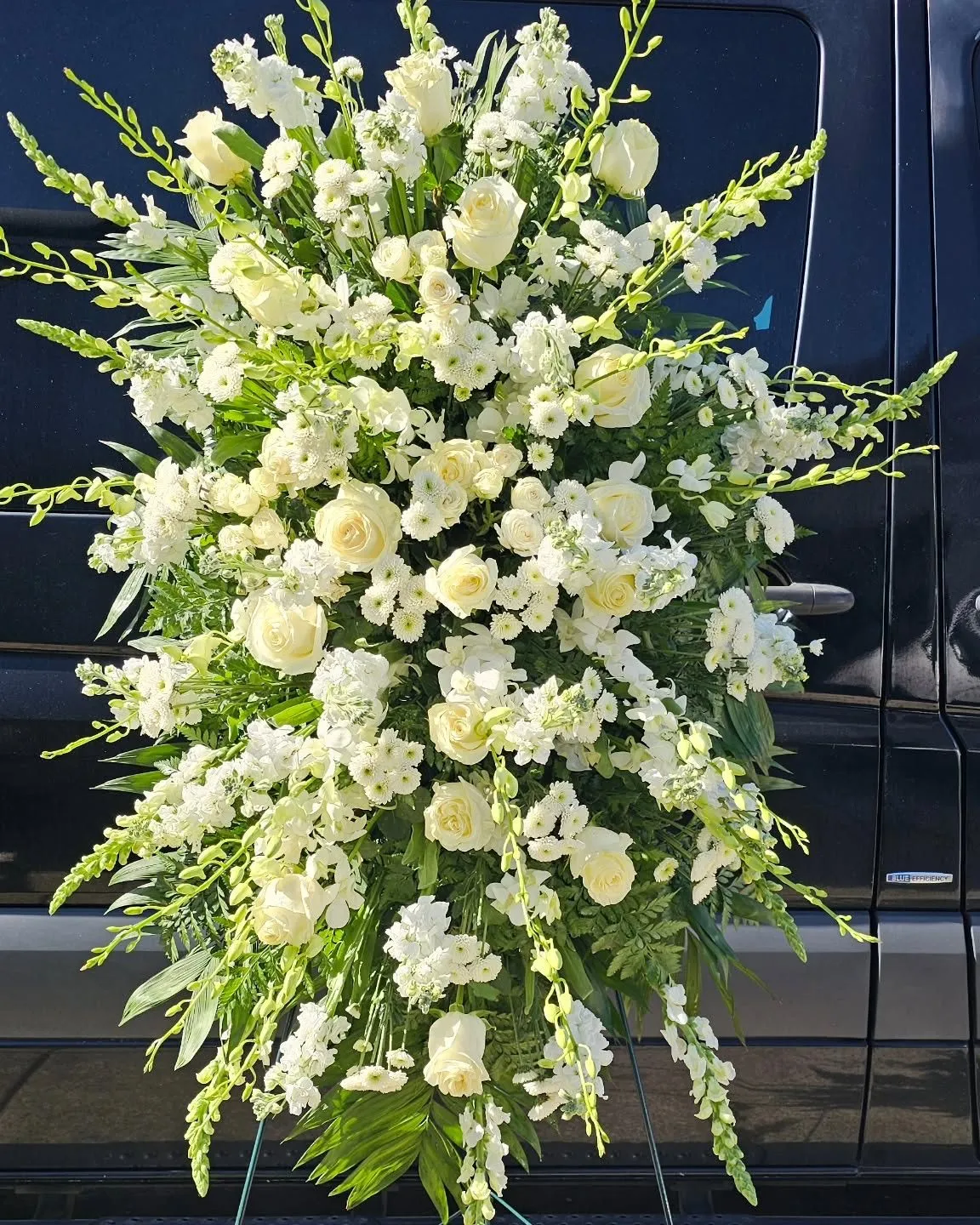
Wreath cards follow the same principles as any funeral flower card. The only difference is that wreaths are often sent by groups (a workplace, a church, a neighborhood) rather than individuals, and they're usually displayed on a stand near the casket or at the entrance to the service.
If you're sending a wreath on behalf of a group, lead with the group name so the family can identify it immediately.
Short verses and one-line messages
Some cards are small. Some moments call for fewer words, not more. Here are short messages that work on their own.
What to include (and what to leave out)
Include: the deceased's name if you know it, a brief expression of what they meant, and your name or the group you're representing.
Leave out: lengthy explanations, religious content unless you know it will be welcome, comparisons to other losses, and anything that starts with "at least." Even well-meaning phrases like "they're in a better place" can land wrong depending on the family's beliefs. When in doubt, stick to love and presence.
A note on names: If you're sending flowers on behalf of a group, such as a workplace, a church, or a neighborhood, lead with the group name so the family knows immediately who sent them. "From the team at [Company]" is more useful on a card than a list of individual names.
What if you didn't know the deceased well?
That's okay. You're sending flowers to support the family, not to demonstrate closeness to the person who passed. In that case, focus your card on the living:
Should you write it by hand or print it?
Handwritten is always more personal, even if your handwriting isn't perfect. If the florist is printing the card for you, which is standard practice, try to give them a message that sounds like you, not like a form letter. Read it out loud before you submit it. If it sounds like something you'd actually say, it's right.
How long should it be?
Two to four sentences is ideal for most cards. One sentence is fine if it's heartfelt. The card is accompanying a gesture. The flowers themselves say most of what needs to be said. You're just signing it.
Ordering funeral flowers in Vancouver, WA?
We handle everything from design to delivery and full venue setup. When you call, we'll ask a few simple questions and confirm everything in one conversation.
Call (360) 984-8059